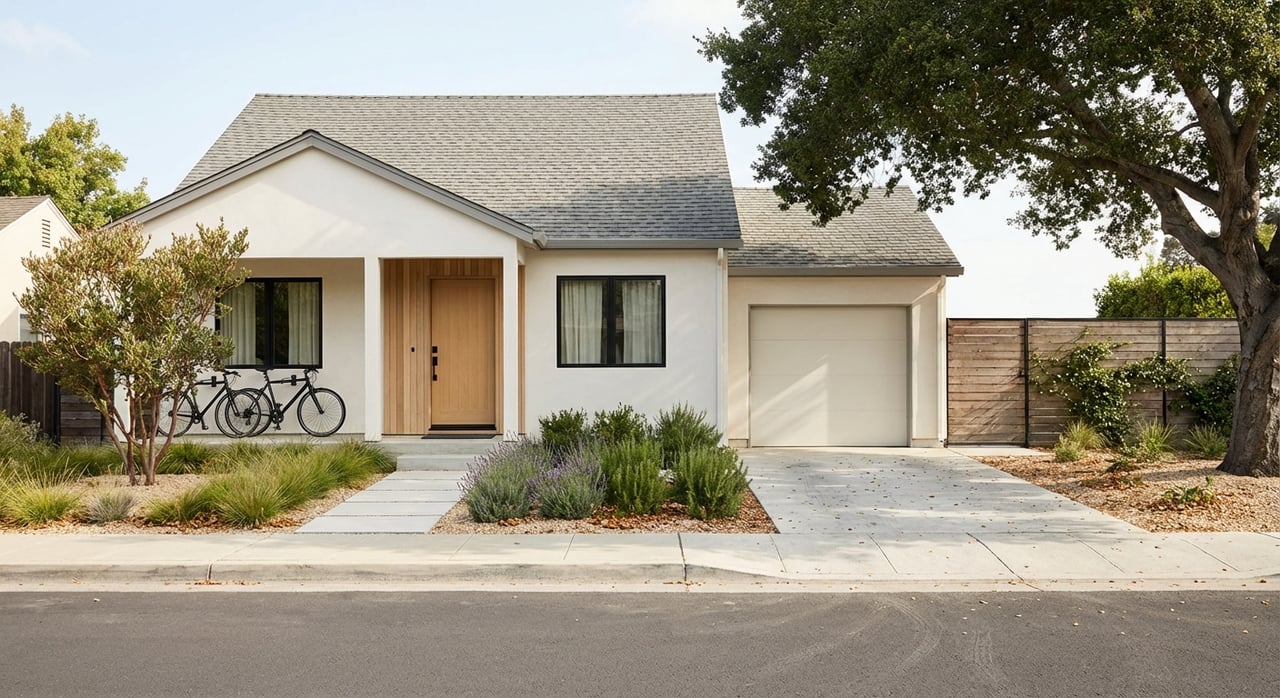
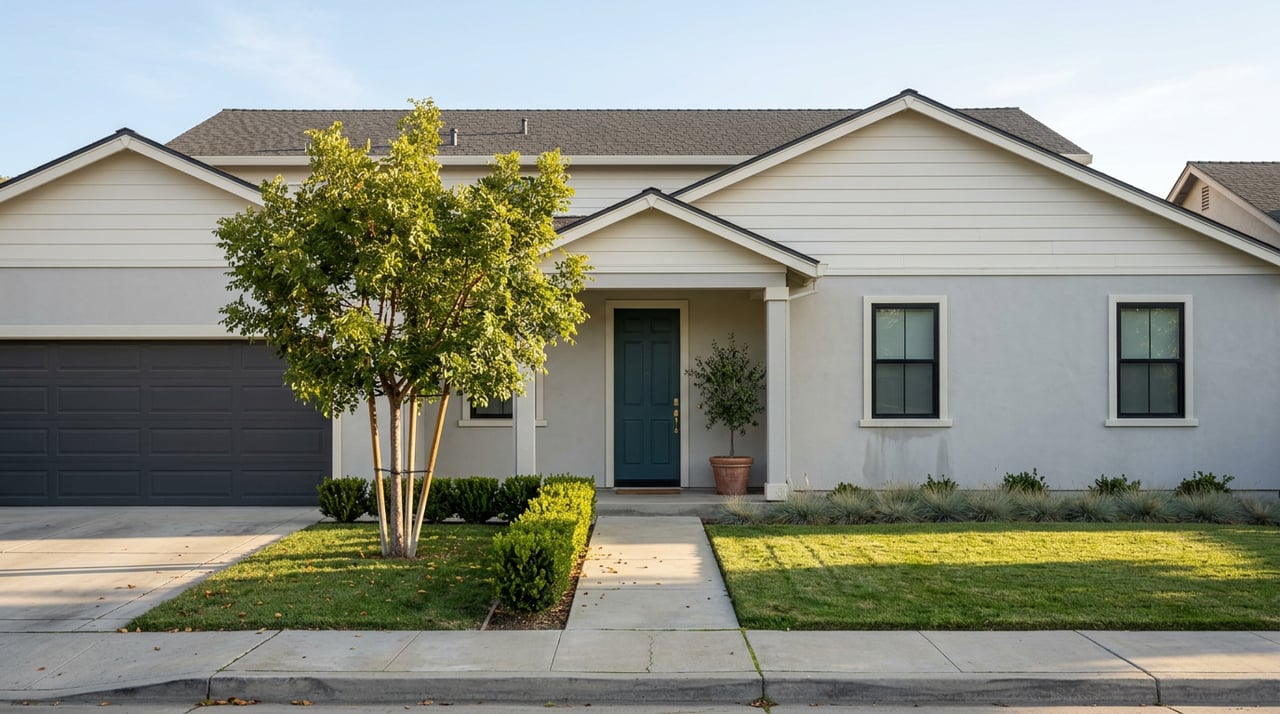
A couple I'll call the Reyes family (details changed, but the scenario is common enough that any Tri-Valley lender will recognize it) went into contract on a newer home in Dublin Crossing at $1.19 million. Their pre-approval had them comfortable. Then their loan officer sent over the final numbers for underwriting, and their estimated monthly housing payment had grown by roughly $400 they hadn't budgeted for. Nothing had changed about the loan amount or the rate. What changed was a line item on the property's tax bill they hadn't been told to look for until it was already baked into their debt-to-income calculation.
That line item is Mello-Roos, and if you're comparing homes across Dublin, Pleasanton, and Livermore right now, it's the reason two listings at the same price aren't actually the same commitment.
The tax that doesn't show up on the flyer
Mello-Roos taxes trace back to 1978, when California voters passed Proposition 13 and capped the base property tax rate at 1% of a home's assessed value, with annual increases limited to 2%. That protection was good news for homeowners, but it left cities and counties without the revenue stream they'd relied on to build the roads, schools, and sewer lines that new development requires. In 1982, the state legislature answered with the Mello-Roos Community Facilities Act, which lets local governments form a Community Facilities District, or CFD, and issue bonds against a special tax levied only on the parcels inside that district.
Here's the part that trips buyers up: a Mello-Roos charge isn't calculated as a percentage of your home's value. Each CFD sets its own formula, called a Rate and Method of Apportionment, and that formula is usually based on square footage, lot size, or property type rather than price. Because it isn't tied to assessed value, it doesn't get the same 1% ceiling your base property tax does, and it doesn't shrink if the market softens the way your base bill effectively does. It's a fixed or slowly escalating charge that rides on top of your regular tax bill for as long as the underlying bonds are outstanding, often two to four decades.
That's the mechanism. What it means in dollars depends entirely on which side of a city line your parcel sits on.
What it actually costs in Dublin
Dublin is where Tri-Valley buyers meet Mello-Roos most often, and the clearest documented example is Dublin Crossing, marketed as "The Boulevard." The facilities district covering that community, CFD No. 2015-1, levied an annual special tax of roughly $3,912 to $5,830 per single-family home in fiscal year 2024-25, with the exact figure depending on home size. That range works out to about $326 to $486 a month on top of the base 1% property tax. The maximum allowed charge can rise up to 2% a year, and the district is not scheduled to levy any special tax after fiscal year 2050-51, so buyers today are financing infrastructure that will still be on the books for their eventual resale.
It also compounds. One documented Dublin Crossing parcel owed $5,048 combined across the development's two overlapping CFDs in fiscal year 2025-26, a separate infrastructure district plus a services district layered on top of it. That's close to $421 a month before you've factored in your mortgage, insurance, or the base tax rate at all.
Zoom out and the pattern shows up in the math lenders use to compare markets. In areas with heavy CFD coverage, the combined effective property tax rate (base 1% plus every add-on) can land at 1.5% to 1.7% of the purchase price, compared with the 1.1% to 1.3% that's typical where no CFD exists. On paper that sounds like a rounding error. On a monthly payment, it's the difference the Reyes family found out about at underwriting.
The same city, different exposure
| City | Mello-Roos pattern | What that means for a buyer |
|---|---|---|
| Dublin | Concentrated in newer East Dublin tracts, especially Dublin Crossing (CFD No. 2015-1) | Documented, verifiable dollar ranges tied to a specific master plan |
| Pleasanton | Rare, and what exists is mostly legacy | Most homes carry no CFD charge at all |
| Livermore | Limited to newer construction; older tracts often carry none | No reliable citywide figure exists, so each parcel has to be checked individually |
Why Pleasanton mostly skips this
Pleasanton's housing stock is largely older than the CFD financing tool itself, or was built out before the city leaned on Mello-Roos the way Dublin's newer master-planned tracts did. The practical result is that most Pleasanton homes carry no CFD special tax at all, and what legacy districts remain are the exception rather than something a typical buyer will encounter. If you're comparing a Pleasanton listing to a similarly priced Dublin Crossing listing, you're very likely comparing a home with no added special tax against one carrying several hundred dollars a month in bond-financed infrastructure charges, and that gap exists regardless of what either listing's asking price says.
Livermore's patchwork
Livermore doesn't split as cleanly. Mello-Roos there shows up on newer construction, while older tracts across town typically carry little or none, which means there's no single citywide number a buyer can rely on the way Dublin Crossing's documented range gives you. The only way to know what a specific Livermore parcel owes is to check that parcel directly. That uncertainty is itself useful information: if a Livermore listing's marketing doesn't mention a special tax district, don't assume the absence means anything until you've confirmed it against the actual tax bill.
A home advertised at the same price in two different Tri-Valley cities is not automatically the same monthly commitment. The gap doesn't show up in the listing photos, the square footage, or the county's median sale price, which sat at roughly $1.2 million across Alameda County over the three months ending May 2026, up 5.4% year over year, with homes selling in about 17 days on average. That figure tells you what buyers paid at the closing table. It says nothing about what they're still paying every month after.
How to check before you write the offer
- Pull the seller's current secured property tax bill and look for a line labeled "CFD No. __," "Special Tax," or a district name separate from the base 1% levy.
- Ask the listing agent or title company for the CFD's Rate and Method of Apportionment document, which spells out exactly how the charge is calculated and whether it escalates annually.
- Confirm how your lender treats the special tax in your qualifying ratio. Most count it as part of your monthly housing expense right alongside principal, interest, taxes, and insurance, so it can affect how much home you actually qualify for.
- Review the preliminary title report for a recorded Notice of Special Tax Lien tied to the parcel.
- Ask when the district's bonds are scheduled to be paid off, since that tells you how many more years the charge will follow the property, including into a future resale.
None of this shows up automatically on a listing sheet. It has to be requested.
A few questions worth asking directly
Does Mello-Roos ever go away? Yes, once the bonds that funded the district are paid off. Dublin's CFD No. 2015-1, for example, is not scheduled to levy any special tax after fiscal year 2050-51. Until then, the charge is a fixed obligation of the parcel, not the current owner, so it transfers with the sale.
Is it tax deductible? Generally, only the portion of a property tax bill based on assessed value qualifies for the standard deduction, and Mello-Roos is typically a flat parcel charge rather than a value-based one. There's a narrow exception for assessments that fund ongoing maintenance or interest rather than new construction, but the burden is on the taxpayer to document that split. With the SALT cap raised to $40,000 for 2026, more California homeowners may reach the point where this distinction actually matters, which makes it worth a conversation with a CPA rather than an assumption either way.
Does no CFD automatically mean a lower total cost? Not necessarily. It means one specific line item is likely absent. It's still worth comparing the full picture, insurance, HOA dues if any, and the base tax rate, before deciding a lower Mello-Roos exposure adds up to genuine savings.
If you're weighing a home in Dublin Crossing against one in Pleasanton or Livermore, the sticker price is the easiest number to compare and the least useful one on its own. I can pull the actual tax bill and CFD documents on any specific address you're considering before you write an offer, so the number you're comparing is the one you'll actually pay. Reach out to Chris A. Sabido to book an appointment and walk through it together.